Flipkart, the Indian e-commerce giant owned by Walmart, is preparing to challenge the duopoly of Zomato and Swiggy in India’s food delivery market. It is entering a fiercely competitive space—one where previous attempts by Amazon and Google to gain a foothold have failed.
According to two people familiar with the matter, the Bengaluru-based company is currently testing its food delivery service internally, having expanded the pilot from a few hundred employees to over 8,000. Furthermore, the company has mobilized a dedicated delivery fleet through its logistics arm, Ekart—separate from the team that handles its e-commerce deliveries—in preparation for a full-scale launch.
As reported by TechCrunch, the service—currently restricted to employees—appears as a standalone tab within Flipkart’s main shopping app, alongside its “Minutes” quick-commerce offering and travel booking services. The platform sources restaurant information via ONDC (a government-backed network that connects online buyers and sellers across various platforms) as well as through direct partnerships with restaurants.
Delivery riders wearing uniforms branded with “Eat-in by Minutes” have also been spotted fulfilling orders on the streets of Bengaluru, the southern Indian city where Flipkart is headquartered.
By expanding into food delivery, Flipkart is entering a market that brokerage firm Bernstein estimates is growing at an annual rate of 18% to 20%. Nevertheless, online food delivery currently accounts for just over 15% of India’s total food service industry. According to Bernstein, Zomato and Swiggy serve a combined total of approximately 85 million to 95 million paying users annually. This figure underscores the dominance of the two incumbents, while also highlighting significant room for growth in online food ordering within the world’s most populous nation—a country with over a billion internet users.
Flipkart is not the only company attempting to disrupt India’s food delivery landscape. Rapido, a ride-hailing firm that has already posed a serious challenge to Uber and its Indian rival Ola, is now expanding its own food delivery service, “Ownly”—a platform that charges restaurants zero commission. Meanwhile, Swiggy has launched another app called Toing, aimed at customers looking for more affordable meal options. Both moves reflect the growing pressure on existing industry pricing models and the commissions paid by restaurants.
“Monopolies are bad, but a duopoly is even more pathetic,” says Sagar Daryani, president of the New Delhi-based National Restaurant Association of India, which represents over 500,000 restaurants across the country. “Whatever one does, the other follows suit.”
Dariani believes that the restaurant industry has long needed an alternative to the two dominant platforms.
Flipkart is not the first well-capitalized company to attempt an entry into India’s food delivery market. In 2020, Amazon launched a food ordering service in Bengaluru, only to shut it down two years later. Google’s “Areo” app also offered food ordering, but it likewise failed to gain traction. Uber also exited the Indian market in 2020, selling its local Uber Eats business to Zomato.
According to Dariani, there is a key distinction between Flipkart and the companies that previously attempted to enter the food delivery space. Zomato and Swiggy both began as dedicated food delivery services before expanding into the broader quick-service/fast-food sector. Flipkart, by contrast, is taking the opposite approach: it is leveraging its established e-commerce operations and its growing quick-service business as a springboard to enter the food delivery market.
Daryani told TechCrunch, “Flipkart’s quick-commerce edge will translate into the food delivery space, making it leaner and more efficient.”
Restaurants also hope that the entry of a new platform will lower the costs associated with selling food online. Daryani, co-founder and CEO of the dumpling chain Wow! Momo Foods, noted that Flipkart is proposing a base commission of around 10%—significantly lower than the 20% to 25% commission restaurants typically pay to Zomato and Swiggy.
Commissions are only one part of the cost. Daryani explained to TechCrunch that once advertising, discounts, and other promotional expenses are factored in, restaurants can end up spending 40% to 50% of an order’s value on existing platforms. He expects Flipkart to keep the total cost to around 15% to 16%, which would allow restaurants to retain more earnings from each order.
However, getting restaurants on board is one thing; winning over customers is another. Bernstein estimates that by improving operational efficiency, a new entrant could only save customers 20 to 30 rupees (approximately 20 to 30 cents) per order—a margin likely insufficient to lure users away from Zomato and Swiggy. The incumbent platforms could also simply offer deeper discounts to retain their customer base.
Flipkart’s presence in Bengaluru is not intended to be a long-term, isolated experiment. Daryani told TechCrunch that the company has informed restaurants that it expects to officially launch its food delivery service by the end of October, with plans to expand into five or six cities by the end of the year.
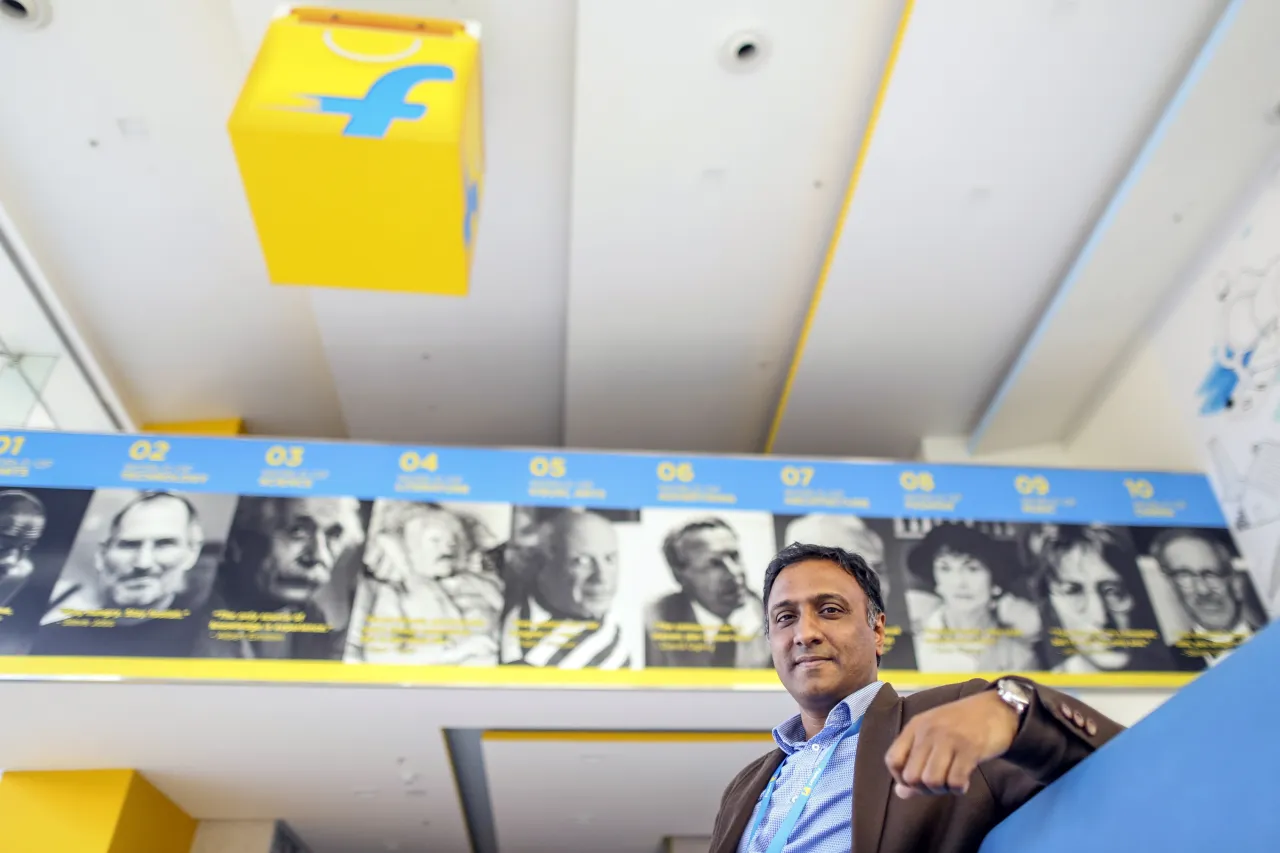
This aggressive push into food delivery comes at a time when Flipkart’s long-awaited IPO remains uncertain. CEO Kalyan Krishnamurthy (pictured above) recently declined to provide a specific timeline for an initial public offering, even as the company continues to broaden its service offerings in an effort to boost user engagement on its app.
Flipkart’s expansion arrives amid intensifying competition in India’s e-commerce market. Quick-commerce platforms—which began by delivering groceries in a matter of minutes—have since branched out into selling items like the latest iPhones and other non-essential goods, bringing them into more direct competition with Flipkart and Amazon.