Join Banswara、Barmer、Balotra、Bikaner、Churu、Dungarpur、Beawar、Jaisalmer、Jalore、Jodhpur、Phalodi、Nagaur、Pali and Sirohi
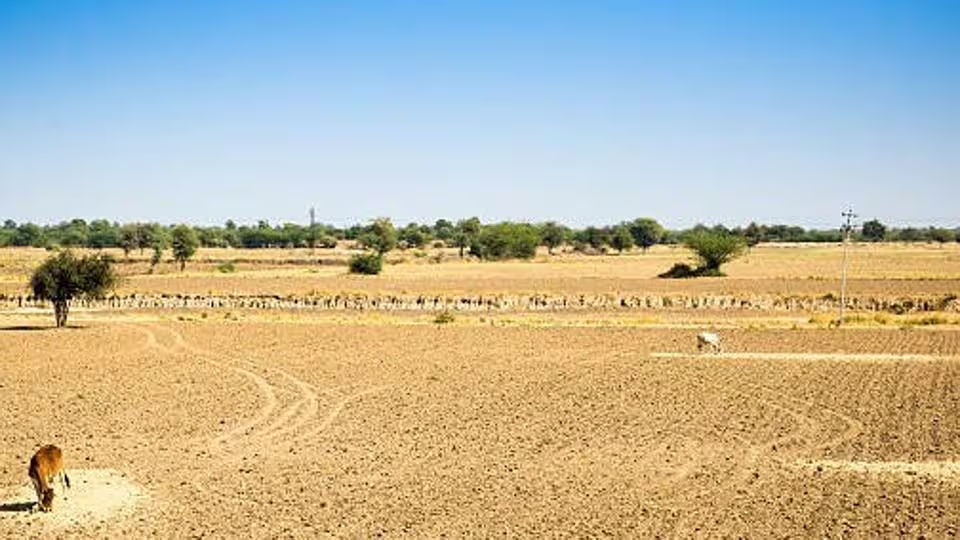
Due to insufficient rainfall, dwindling water sources, and damage to Kharif crops, 80 tehsils across 14 districts in Rajasthan have been declared drought-affected areas.
On October 24 and 25, the Department of Disaster Management, Relief, and Civil Defence issued two notifications designating 69 tehsils (sub-districts) as severely drought-affected and 11 tehsils as moderately drought-affected. These declarations remain in effect for six months from the date of issuance.
The first notification covers 53 tehsils across 13 districts. The second notification adds 27 tehsils across 10 districts—including Bikaner District—bringing the total number of affected districts to 14. Among these additional tehsils, 25 are classified as severely affected and 2 as moderately affected.
The affected districts include Banswara, Barmer, Balotra, Bikaner, Churu, Dungarpur, Beawar, Jaisalmer, Jalore, Jodhpur, Phalodi, Nagaur, Pali, and Sirohi.
According to the notifications, the assessment took into account factors such as insufficient rainfall, reduced surface and groundwater supplies, poor crop conditions, and data from the central drought monitoring portal. This evaluation follows the Drought Management Manual issued by the central government in 2016.
Jodhpur has the highest number of affected tehsils (sub-districts), with 12; followed by Barmer and Jalore, with 10 each; Balotra with 9; Pali with 8; and Dungarpur, Jaisalmer, and Phalodi with 7 each. Banswara has 3; Churu and Beawar have 2 each; while Bikaner, Nagaur, and Sirohi each have 1.
In Jodhpur, 11 tehsils—Osian, Tinwari, Balesar, Bawri, Shergarh, Sekhala, Kudi Bhagtasni, Jodhpur, Jhanwar, Bilara, and Luni—are classified as severely affected, while Pipar Shahar is moderately affected.
All 10 tehsils listed in Barmer—Gadra Road, Chohtan, Barmer, Baytoo, Sedwa, Ramsar, Sheo, Dhanau, Barmer Rural, and Batadu—are severely affected. The 10 tehsils in Jalore—Ahore, Chitalwana, Jaswantpura, Bagoda, Bhinmal, Raniwara, Sanchore, Sayla, Bhadrajun, and Jalore—also fall into the severely affected category.
In Balotra, the tehsils of Gudamalani, Kalyanpur, Pachpadra, Gida, Dhorimanna, Patodi, Samdari, Siwana, and Sindhari are classified as severely affected. In Pali district, all eight listed tehsils—Sumerpur, Desuri, Pali, Bali, Marwar Junction, Rani, Rohat, and Sojat—are severely affected.
In Jaisalmer, the tehsils of Fatehgarh, Mohangarh, Sam, Ramgarh, Pakaran, and Phalsund are severely affected, while Jaisalmer tehsil is moderately affected. In Phalodi, the areas of Phalodi, Bap, Bapini, Aau, Ghantiyali, and Dechu are severely affected, whereas Setrawa is moderately affected.
In Dungarpur district, the tehsils of Aspur, Galiakot, Chori, and Sabla are classified as severely affected, while Simlawara, Paldeval, and Obri are moderately affected. In Banswara district, the tehsils of Garhi and Artuna are severely affected, while Sajjangarh is moderately affected.
Rajgarh and Sidhmukh in Churu, as well as Sheoganj in Sirohi, have been categorized as severely affected. Raipur and Jaitaran in Beawar, Khinvsar in Nagaur, and Hada in Bikaner are classified as moderately affected.
Below-Normal Monsoon
According to a report released by the Ministry of Water Resources on September 30, Rajasthan recorded 350.83 mm of rainfall between June 1 and September 30—a deficit of 73.88 mm compared to the normal rainfall of 424.71 mm.
The department has categorized 14 of the state’s 41 districts as having deficient rainfall, while 24 districts have recorded normal rainfall, and 3 districts have experienced excess rainfall. Districts with deficient rainfall include Balotra, Banswara, Dungarpur, Jaisalmer, Jalore, Jodhpur, Pali, and Sirohi.
The same report indicates that the water storage level across 693 monitored dams in the state stands at 62.16% of their total capacity, compared to 90.19% during the same period last year. In the Jodhpur region—as designated by the Water Resources Department—storage levels are at only 15.98%, down from 80.45% a year ago.